
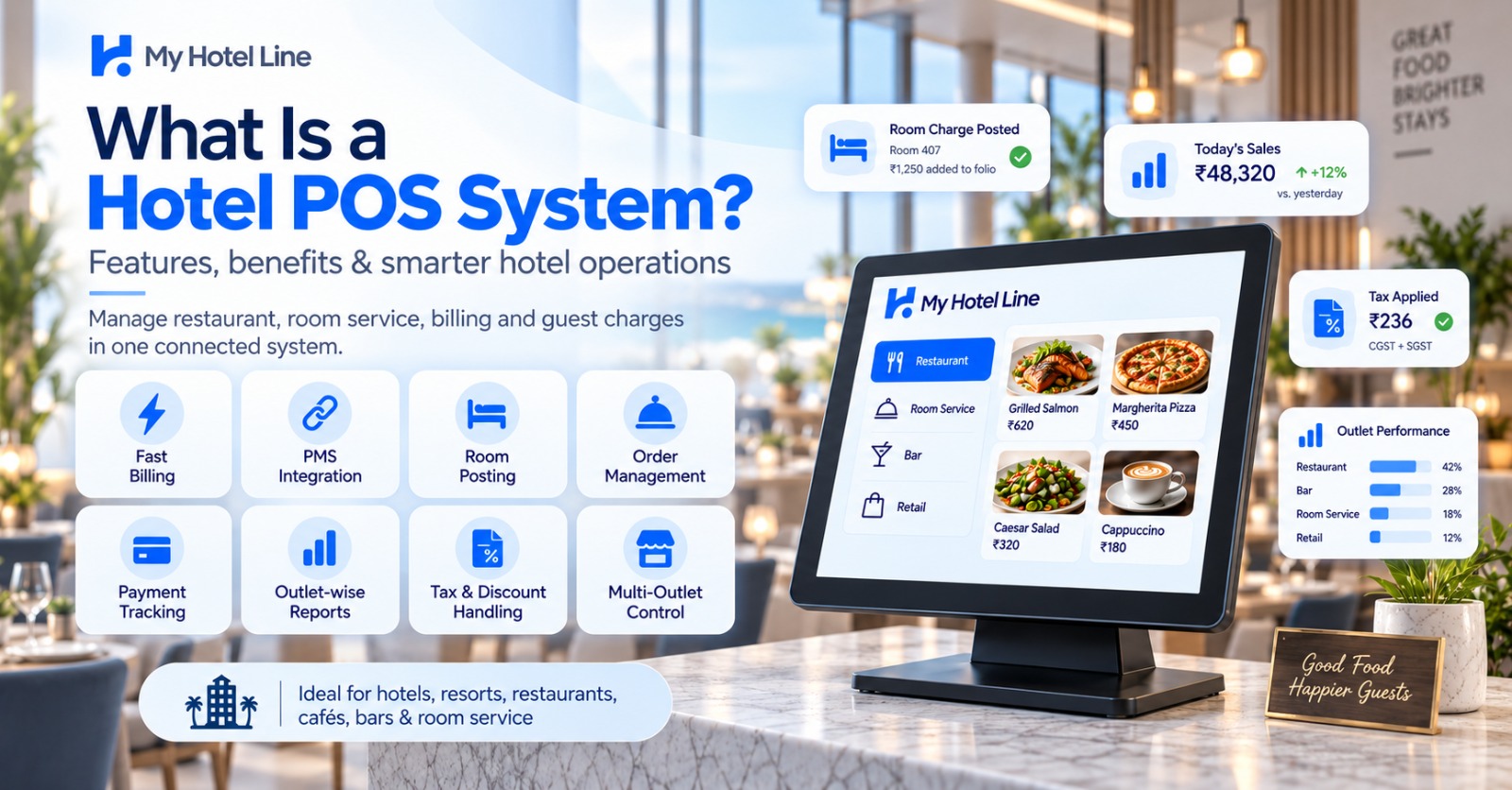
What Is a Hotel POS System? Features, Benefits & How MyHotelLine Helps Hotels Manage Payments and Operations
A hotel POS (Point of Sale) system is software that helps hotels, resorts, restaurants, cafés, bars, and other hospitality businesses manage sales, orders, payments, billing, and transactions from different service areas. Instead of handling restaurant bills, room-service orders, café purchases, or other guest transactions separately, a hotel POS system brings these activities into one organized digital system.
For hotels, a POS system is especially useful because guests may purchase services from multiple outlets during their stay. A guest might have breakfast at the restaurant, order room service, purchase a beverage at the bar, or use another hotel service. A hotel POS system can record these transactions accurately and help staff manage billing more efficiently.
How Does a Hotel POS System Work?
A hotel POS system works as a central point for managing sales and payments across different hotel outlets. When a guest places an order at a restaurant, café, bar, or room-service counter, staff can enter the order into the POS system. The system records the items, calculates the bill, applies applicable taxes or discounts, and processes the payment.
When integrated with a hotel PMS, the POS can also support a smoother guest billing process. For example, an authorized room charge can be associated with the guest's room account, allowing the amount to be settled along with the accommodation bill during checkout. This reduces manual paperwork and helps hotel staff maintain more accurate transaction records.
Why Is a POS System Important for Hotels?
A hotel POS system does more than process payments. It helps hotels organize their food and beverage operations, improve billing accuracy, monitor sales, and gain better visibility into outlet performance. For properties operating multiple revenue-generating outlets, having a centralized POS can make day-to-day operations easier to manage.
Without a dedicated POS system, hotel staff may rely on manual bills, spreadsheets, separate payment records, or disconnected systems. These processes can increase the possibility of billing errors and make it more difficult for management to understand sales performance. A digital hotel POS system provides a more structured way to record and manage transactions.
Key Features of a Hotel POS System
A modern hotel POS system can include features for order management, billing, payment processing, tax calculation, discounts, outlet management, sales reporting, inventory management, and integration with hotel software. The exact features vary between providers and property types.
For restaurants and food-service outlets, order management allows staff to enter and update orders quickly. Billing functionality calculates the total amount based on selected products, quantities, taxes, discounts, and other applicable charges. Payment functionality allows the hotel to record completed transactions and maintain organized payment information.
Reporting is another important feature. Hotel managers can use POS reports to understand sales by outlet, product, category, date, or other available parameters. This information can support operational and revenue-related decisions.
Hotel POS vs Restaurant POS: What Is the Difference?
A restaurant POS primarily focuses on restaurant operations such as food ordering, table management, billing, payments, and sales reporting. A hotel POS system can provide these capabilities while also supporting the wider requirements of a hospitality property.
The biggest difference is often integration. Hotels may need their POS to work with a Property Management System (PMS) so that restaurant, bar, room-service, and other eligible charges can be connected with guest accounts. This creates a more unified workflow between hotel operations and point-of-sale transactions.
How Does a Hotel POS Integrate With a PMS?
The combination of a hotel PMS and POS system can help connect front-office and outlet operations. The PMS manages core hotel activities such as reservations, guest profiles, room status, check-in, and check-out, while the POS manages transactions generated through hotel outlets.
For example, when a guest orders dinner from the hotel restaurant, the POS records the order and generates the applicable bill. If the integration supports room posting, the charge can be transferred to the guest's room account. The front desk can then see the applicable charge when preparing the guest's final bill.
This type of integration can reduce duplicate data entry and help staff work with more consistent transaction information.
How MyHotelLine Hotel POS Helps Hotels
MyHotelLine provides hospitality technology solutions designed to help hotels manage different parts of their operations through connected digital tools, including Cloud PMS, Hotel Booking Engine, Channel Manager, POS, and Mobile App solutions.
With a MyHotelLine hotel POS system, hotels can use a digital platform to manage outlet sales, orders, billing, and payment-related workflows. When POS functionality works alongside the hotel's broader technology environment, hotel teams can reduce dependence on disconnected manual processes and improve operational visibility.
For a hotel with a restaurant, café, bar, or room-service operation, a POS system can help staff record transactions more efficiently while giving management better insight into outlet sales and performance.
What Are the Benefits of MyHotelLine POS for Hotels?
A hotel using MyHotelLine POS can benefit from a more organized approach to sales management, billing, order processing, payment recording, and reporting. Instead of maintaining separate manual records for different outlets, the hotel can use digital tools to manage transactions more efficiently.
Integration with other hotel technology can be particularly valuable for properties that want to connect their operational workflows. When the PMS, booking engine, channel manager, and POS work as part of a connected hotel technology ecosystem, staff can spend less time managing duplicate information and more time focusing on guest service.
Who Should Use a Hotel POS System?
A hotel POS system can be useful for hotels, resorts, boutique hotels, restaurants within hotels, cafés, bars, and properties offering room service or multiple guest-facing services.
Small and independent hotels can use POS software to replace manual billing and improve transaction management. Larger hotels and resorts can benefit from centralized management across multiple outlets and more detailed sales reporting.
Hotel POS System FAQs
What is a hotel POS system?
A hotel POS system is software used to manage sales, orders, billing, payments, and transactions across hotel outlets such as restaurants, bars, cafés, and room service.
What does POS stand for in a hotel?
POS stands for Point of Sale. In a hotel, a POS system manages transactions generated through food and beverage outlets and other applicable hotel services.
Can a hotel POS integrate with a PMS?
Yes. Hotel POS systems can integrate with a Property Management System to connect outlet transactions with guest accounts and support smoother billing workflows.
Is a hotel POS system useful for small hotels?
Yes. A POS can help small hotels manage restaurant, café, bar, or room-service transactions more systematically and reduce dependence on manual billing processes.
What is the difference between a hotel PMS and POS?
A PMS manages core hotel operations, including reservations, rooms, guest information, check-in, and check-out. A POS manages sales and transactions from hotel outlets such as restaurants, bars, and cafés.
Does MyHotelLine provide hotel POS software?
MyHotelLine offers POS solutions as part of its hospitality technology platform, alongside Cloud PMS, Hotel Booking Engine, Channel Manager, and other hotel management solutions.
Conclusion
A hotel POS system is an important part of modern hotel technology because it helps properties manage orders, sales, billing, payments, and outlet operations more efficiently. When connected with a hotel PMS and other hospitality systems, it can create a more streamlined flow of information between different departments.
For hotels looking for an integrated technology approach, MyHotelLine combines POS with solutions such as Cloud PMS, Booking Engine, and Channel Manager, helping hospitality businesses manage their operations through a connected technology ecosystem.
We are trusted by over X+ properties in X countries. It’s your turn now!


